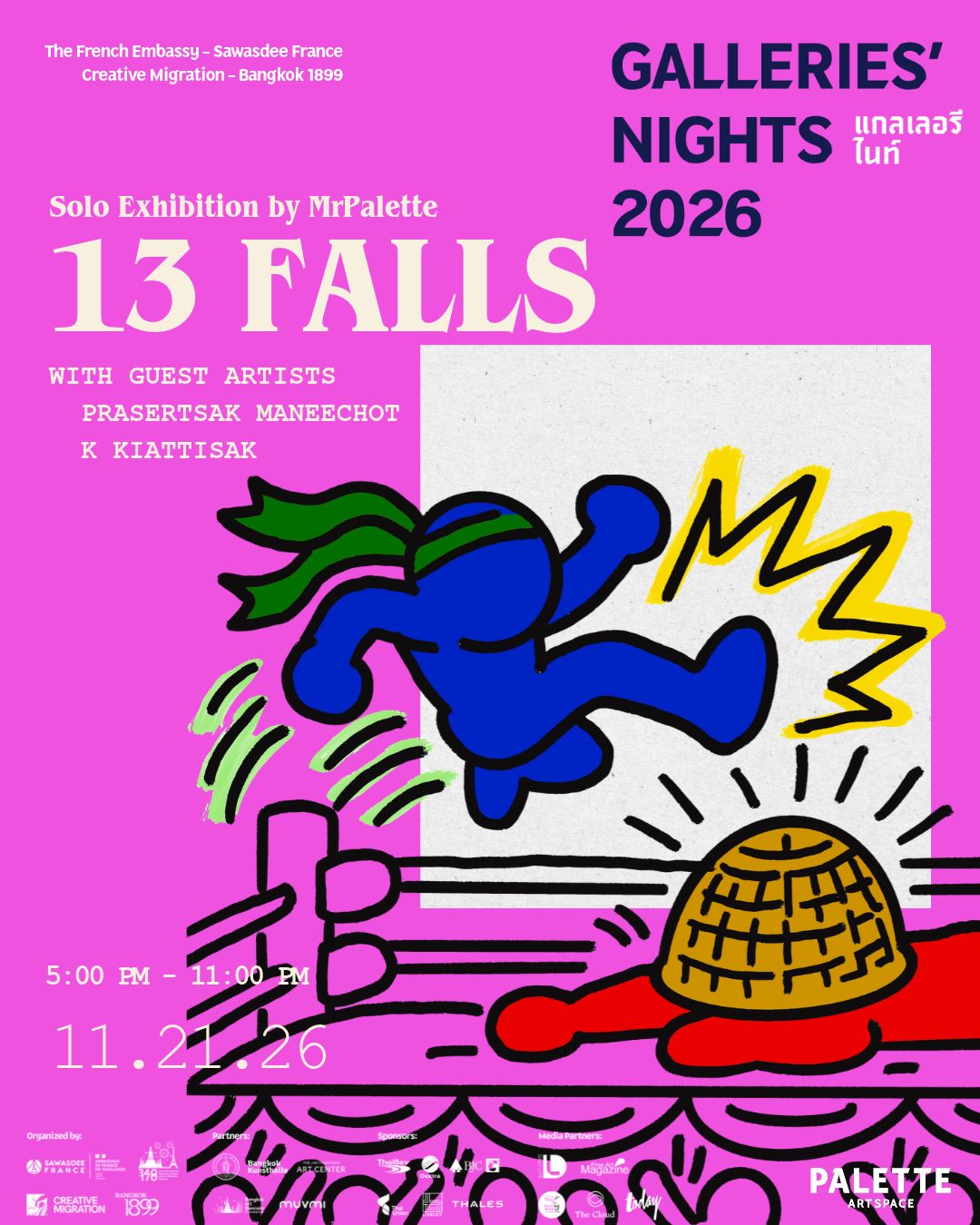
A Solo Exhibition By MrPalette (PaPaNote)
Guest Artists: Prasertsak Maneechot , and K Kiattisak
Curated by Watjanasin Char
Exhibition Period: 11 – 25 NOVEMBER 2026
Venue: Palette Artspace (3rd Floor)
MrPalette, also known as PaPaNote, is a contemporary artist whose practice explores the relationships between art, belief, religion, and social structures. His works often reinterpret familiar aspects of everyday life through a simple visual language characterized by doodle-like lines and figures stripped of almost all individual identity. Beneath their playful, sometimes childlike appearance lie questions about power, faith, and human behavior. Rather than seeking to provide definitive answers, he uses art as a space in which viewers are invited to question what they have long accepted as normal.
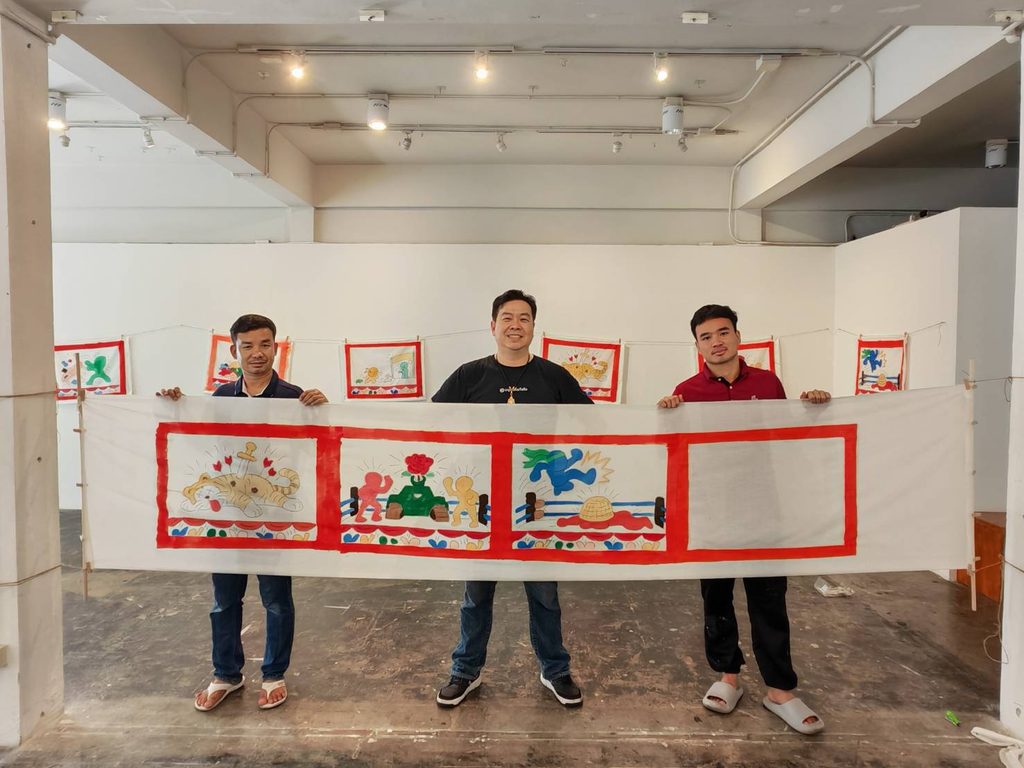
13 FALLS draws inspiration from Bun Phawet, a traditional Buddhist festival celebrated in Northeastern Thailand, rooted in the Vessantara Jataka. Its 13 chapters tell the story of generosity, or Dāna Pāramī (the Perfection of Giving), one of the Ten Perfections in Buddhist teachings. These stories are traditionally shared through sermons known as Thet Mahachat and ceremonial processions featuring long painted narrative cloths, known as Pha Phawet.
The artist reinterprets this 13-chapter narrative structure as 13 falls within an arena of power, drawing a parallel with the 13 successful military coups in Thailand’s political history since the 1932 revolution that transformed the country’s system of government.
Rather than telling these stories solely through the figures who hold power, the artist chooses to examine them from the perspective of the spectators seated around the ring.
Inside a wrestling arena, fighters compete for victory. Some fall, some rise again, and others return to reclaim their former titles. Cheers, boos, and excitement become part of the spectacle, while the audience watches, awaits the outcome, and hopes that the fighter they support will emerge victorious.
But what if this arena represents the society in which we live? What if the fighters are not competing for a championship belt, but for power that rightfully belongs to the people?
This raises a fundamental question:
What have we given away to them?
In the Vessantara Jataka, generosity represents the willingness to sacrifice and let go of attachment. Yet in the world we inhabit, can surrendering our own rights and authority to others truly be considered an act of giving in the same sense?
Do we give away our power willingly, out of trust, or simply because we have grown accustomed to allowing others to make decisions on our behalf?
And when the power we have entrusted to others is repeatedly fought over, seized, and exchanged, do we, as its rightful owners, still have any say in determining the outcome?
13 FALLS is therefore not merely a story about those who fall inside the ring. It is also a story about those who remain outside it—the spectators who may have unknowingly played a part in creating the very arena they now watch.
The artist does not attempt to tell viewers that they should rise up and fight, nor does he suggest which side they should support. Even he does not know what the future holds for this arena.
Instead, he turns the questions back upon himself.
Will we continue to sit among the spectators, watching fighters take turns struggling for power that belongs to us?
Or has the time come for us to step into the ring and reclaim what we no longer wish to give away?
Or perhaps…
We may simply choose to walk away from the arena, return to our own lives, pursue whatever happiness we can find, and allow these endless struggles to remain nothing more than a recurring form of entertainment.
Ultimately, the artist is not asking who will emerge victorious in this arena.
He is asking: If the power belonged to us in the first place, why have we become mere spectators?
นิทรรศการ 13 FALLS ได้รับแรงบันดาลใจจากประเพณีบุญผะเหวดของภาคอีสาน ซึ่งมีรากฐานจากพระเวสสันดรชาดก เรื่องราว 13 กัณฑ์ที่ถ่ายทอดอุดมคติแห่งการให้ทาน หรือ ทานบารมี อันเป็นหนึ่งในบารมี 10 ประการ ผ่านการเทศน์มหาชาติและขบวนแห่ผ้าผะเหวดที่บอกเล่าเรื่องราวด้วยภาพจิตรกรรมบนผืนผ้ายาว ศิลปินนำโครงสร้างการเล่าเรื่องทั้ง 13 กัณฑ์มาเปรียบเทียบกับการล้มลง 13 ครั้งในสังเวียนแห่งอำนาจ ซึ่งเชื่อมโยงกับประวัติศาสตร์การรัฐประหารที่ประสบความสำเร็จในประเทศไทยนับตั้งแต่การเปลี่ยนแปลงการปกครอง พ.ศ. 2475
แต่แทนที่จะเล่าเรื่องผ่านภาพของผู้มีอำนาจเพียงอย่างเดียว ศิลปินกลับเลือกมองเหตุการณ์เหล่านั้นผ่านสายตาของผู้ชมที่นั่งอยู่รอบสังเวียน
ในสังเวียนมวย นักสู้ต่างขึ้นไปต่อสู้เพื่อชัยชนะ บางคนล้มลง บางคนลุกขึ้น และบางคนกลับมาทวงตำแหน่งเดิม เสียงเชียร์ เสียงโห่ร้อง และความตื่นเต้นกลายเป็นส่วนหนึ่งของการแสดง ขณะที่ผู้ชมทำได้เพียงเฝ้ามอง รอคอยผลการแข่งขัน และหวังว่านักสู้ที่ตนสนับสนุนจะเป็นฝ่ายชนะ
แต่หากสังเวียนแห่งนี้คือสังคมที่เราอาศัยอยู่ และสิ่งที่นักสู้กำลังแย่งชิงกันไม่ใช่เข็มขัดแชมป์ หากเป็นอำนาจที่ควรเป็นของประชาชน คำถามสำคัญจึงเกิดขึ้นว่า เราได้มอบอะไรให้พวกเขาไปบ้าง?
ในพระเวสสันดรชาดก การให้ทานคือการเสียสละเพื่อละความยึดมั่นถือมั่น แต่ในโลกของความเป็นจริง การมอบสิทธิ์และอำนาจของตนเองให้ผู้อื่นใช้นั้น เป็นการให้ทานในความหมายเดียวกันหรือไม่? เรามอบอำนาจด้วยความสมัครใจ ด้วยความไว้วางใจ หรือเพียงเพราะเคยชินกับการปล่อยให้ผู้อื่นตัดสินใจแทนเรา?
และเมื่ออำนาจที่เรามอบให้นั้นถูกนำไปใช้ต่อสู้ แย่งชิง หรือเปลี่ยนมือกันครั้งแล้วครั้งเล่า เราในฐานะเจ้าของอำนาจที่แท้จริง ยังมีสิทธิ์กำหนดผลลัพธ์ของการแข่งขันนี้อยู่หรือไม่?
13 FALLS จึงไม่ใช่เพียงเรื่องราวของผู้ที่ล้มลงในสังเวียน แต่ยังเป็นเรื่องราวของผู้ที่นั่งดูอยู่ข้างนอก ผู้ชมที่อาจมีส่วนร่วมในการสร้างสังเวียนแห่งนี้ขึ้นมาโดยไม่รู้ตัว
ศิลปินไม่ได้พยายามบอกว่าผู้ชมควรลุกขึ้นต่อสู้ หรือควรเลือกอยู่ฝ่ายใด เพราะแม้แต่ตัวเขาเองก็ยังไม่รู้ว่าอนาคตของสังเวียนแห่งนี้จะเป็นอย่างไร
เขาเพียงย้อนกลับมาถามตัวเองว่า…
เราจะยังคงนั่งเป็นผู้ชมต่อไป ปล่อยให้นักสู้ผลัดกันขึ้นไปแย่งชิงอำนาจที่เป็นของเรา?
หรือถึงเวลาแล้วที่เราจะก้าวลงไปในสังเวียน เพื่อทวงคืนสิ่งที่เราไม่ต้องการมอบให้เป็นทานอีกต่อไป?
หรือบางที… เราอาจเลือกเดินออกจากสังเวียน กลับไปใช้ชีวิตของตนเอง แสวงหาความสุขเท่าที่จะทำได้ และปล่อยให้การต่อสู้เหล่านั้นเป็นเพียงความบันเทิงที่เกิดขึ้นซ้ำแล้วซ้ำเล่า
ท้ายที่สุด ศิลปินไม่ได้ถามว่าใครจะเป็นผู้ชนะในสังเวียนแห่งนี้
แต่เขากำลังถามว่า หากอำนาจนั้นเป็นของเราแต่แรก เหตุใดเราจึงกลายเป็นเพียงผู้ชม?